


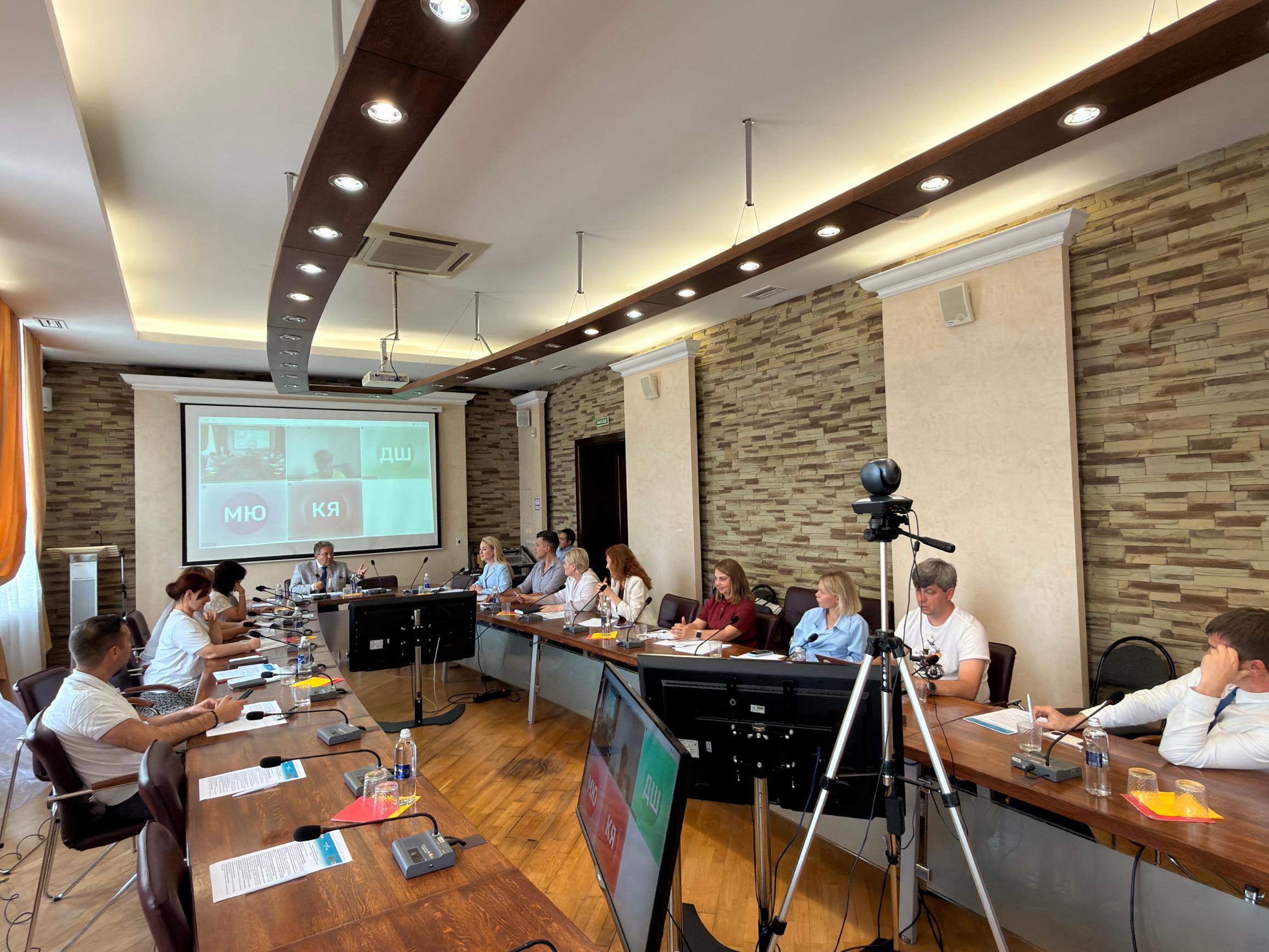
Irkutsk State University hosted an expanded meeting of the Organizing Committee of the Baikal International Ecological Congress. The meeting was chaired by Alexander Schmidt, Rector of Irkutsk State University, Chairman of the Council of Rectors of the Irkutsk Region, and Co-Chairman of the Organizing Committee.
One month remains until the Congress begins. Its current business program includes about 30 events to be held on 24–27 September in Irkutsk, Baikalsk, and other venues across the Baikal Natural Territory. Representatives of government authorities, universities, institutes of the Russian Academy of Sciences, businesses, and public organizations from at least 12 countries are expected to participate in the Congress.
Alexander Schmidt:
The Baikal International Ecological Congress is undoubtedly a significant event both for the Baikal region and for Russia as a whole. One of its key objectives is to create a permanent and authoritative international platform for bringing together government, science, business, and society in the effort to preserve unique ecosystems.
One important result of the preparatory work should be the establishment of the “Baikal” International Scientific and Educational Consortium in the field of protection of aquatic systems and natural heritage. The meeting discussed organizational and legal issues related to its formation.
Yaroslava Ditsevich, Program Director of the Congress:
The task of the Congress is not merely to discuss problems, but to create a professional environment in which solutions and joint projects can emerge. The Consortium will help make this possible; with its support, we hope to continue the collaborative work that has in fact already begun among Russian and foreign universities and research organizations. At the same time, each participant will retain full organizational and academic independence.
The Congress program also assigns a special role to the university community. Universities in the region are participating in the organization of scientific and expert platforms, an exhibition of “green” technologies, the strategic session “Baikal Dialogues,” international events, and the youth program.
Student participation is a separate area of focus. At the meeting, it was proposed to form joint student media groups from Irkutsk State University, Baikal State University, and Irkutsk National Research Technical University to work at Congress venues. Such work could give future journalists and media professionals an opportunity to gain practical experience at a major international event.
According to Alexander Schmidt, preparations are proceeding at a rapid pace, and if the current level of coordination is maintained, there are currently no organizational issues that cannot be resolved.
The Baikal International Ecological Congress is timed to coincide with the 30th anniversary of Lake Baikal’s inclusion on the UNESCO World Heritage List and the 110th anniversary of Russia’s protected-area system. This federal-level event will bring together science, education, government, business, and society around the issues of preserving Lake Baikal and other unique natural territories.


