


Scientists from the Research Institute of Biology of Lake Baikal at Irkutsk State University took part in preparing an international report on the state of the Earth’s climate. The global climate report “State of the Climate in 2025” was published in a special annual issue of the Bulletin of the American Meteorological Society (Q1, IF 6.9). This was reported by Maksim Timofeev, Doctor of Biological Sciences and Director of the Research Institute of Biology of Lake Baikal at Irkutsk State University.
The report was prepared by 251 researchers from 27 countries. For the seventh time, researchers from the Research Institute of Biology of Lake Baikal at Irkutsk State University joined this large-scale international collaboration.
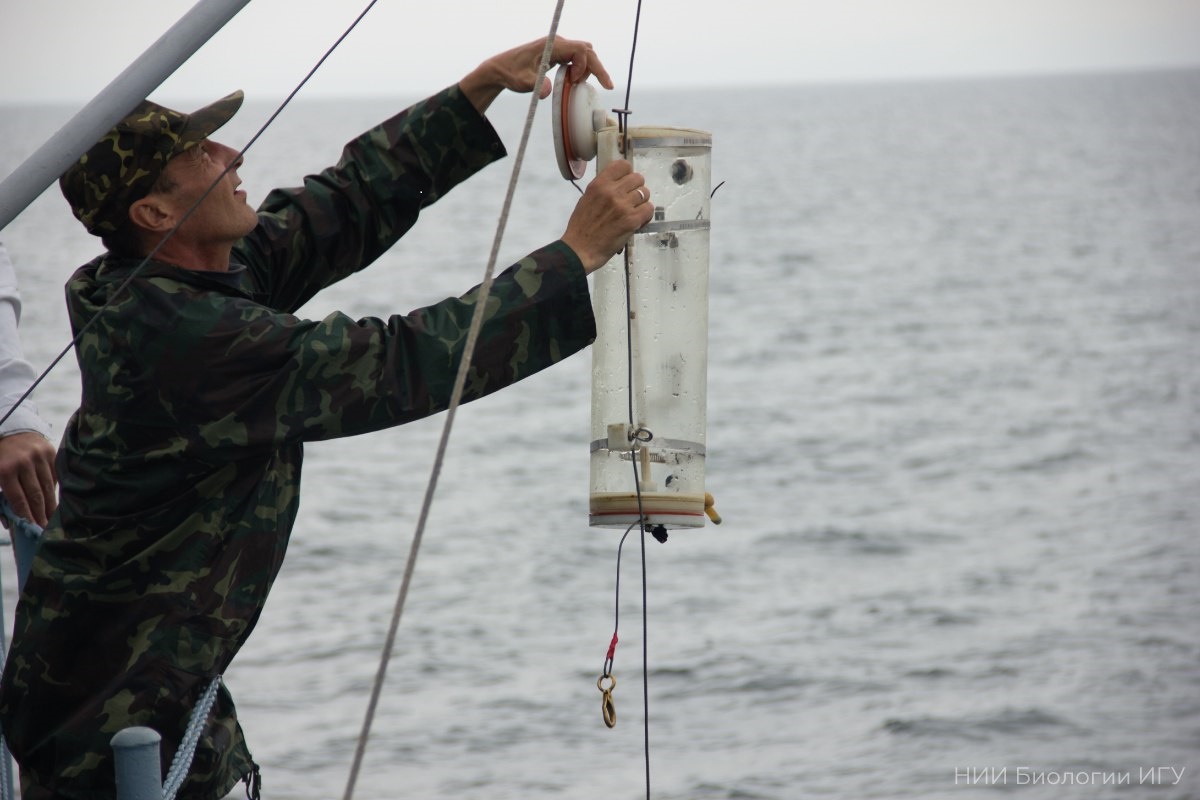
The section devoted to monitoring lake systems includes results from the long-term “Point No. 1” project conducted by Irkutsk scientists. Regular observations at this site have been carried out since 1945. For more than 80 years, plankton samples have been collected and the main characteristics of its habitat recorded in the area of Pelagic Station No. 1 near the settlement of Bolshiye Koty, where the biological station is located. Since 2016, project data have been regularly included in the international climate report, and the university’s researchers have become permanent co-authors of the document.
The year 2025 ranked among the three warmest years in the entire history of instrumental observations, which began in 1850. The decade from 2015 to 2025 became the warmest period in the history of scientific climate observations. Permafrost continues to warm, mountain glaciers continue to lose mass, Northern Hemisphere snow cover is weakening, and lake ice regimes are changing.
According to satellite data for 1,912 lakes worldwide, the temperature of the surface water layer in 2025 was 0.31 °C above the 1995–2020 average. Direct measurements from 38 lakes showed an even larger deviation: 0.70 °C above the long-term global average.
Lake Baikal traditionally demonstrates its own distinctive dynamics. In 2022, its surface temperature was approximately 4 °C below the corresponding global indicator; in 2023–2024 it was approximately 2 °C above it; and in 2025, Baikal’s surface temperature was again about 0.5 °C above the global average.
Maksim Timofeev:
This indicates complex temperature processes in Lake Baikal that differ in many respects from averaged global trends. These features require careful, meticulous analysis of data from our lake and dedicated, continuous monitoring of the state of its ecosystem.
At the same time, the authors of the global report note a contraction of the international network of direct observations. This is evidently a consequence of the general underfunding of such programs: until recently, continuous temperature monitoring was carried out at 38 lakes, whereas in the new cycle it continues at only 25.
Against this background, the record-long continuous observation program on Lake Baikal is of particular importance. Data from “Point No. 1” not only make it possible to assess changes in the lake’s unique ecosystem and compare them with global climate trends, but also provide international science with a genuinely unique data source for long-term analysis of climatic and ecological processes.
Maksim Timofeev:
The fact that the results of observations on Lake Baikal are included every year in such a major international climate document confirms the great value of our work for global science.


