


Recent results from studies on modern sedimentation processes in Southern Lake Baikal have been published in the international journal Limnology and Freshwater Biology. One of the article’s authors is Dr. Nikolai Budnev, Doctor of Physical and Mathematical Sciences, Professor, Dean of ISU Faculty of Physics, leading researcher at ISU Research Institute of Applied Physics, head of the Laboratory of Elementary Particle Astrophysics and Gamma Astronomy commented on this work:
Over the millions of years of Lake Baikal’s existence, a layer of so-called sediments has formed on the lake floor, the thickness of which in many places exceeds a kilometre. These bottom deposits are a unique “archive” containing information about the development of biological and geological processes in Baikal’s waters, climate change and much more. Therefore, the study of both existing deposits and the modern processes of their formation is of great interest from the point of view of various scientific fields.
Research into modern sedimentation processes in Southern Lake Baikal at Irkutsk State University began in 1999, utilizing the infrastructure of the Baikal Neutrino Observatory. Conducting this research requires a significant amount of unique equipment, including sediment traps, which are installed annually in early March at different depths on so-called buoy stations within the deep-water complex of the Baikal Neutrino Observatory, 3.5 km from the shore. Furthermore, high-precision hydro-physical instruments for measuring water temperature, currents, oxygen concentration and other parameters are installed on these same buoy stations. The following year, the equipment is retrieved, the sediment accumulated in the traps over the year is preserved and analysed. Scientists from the Limnological Institute and the Institute of the Earth’s Crust of the Siberian Branch of the Russian Academy of Sciences actively participate in these studies.
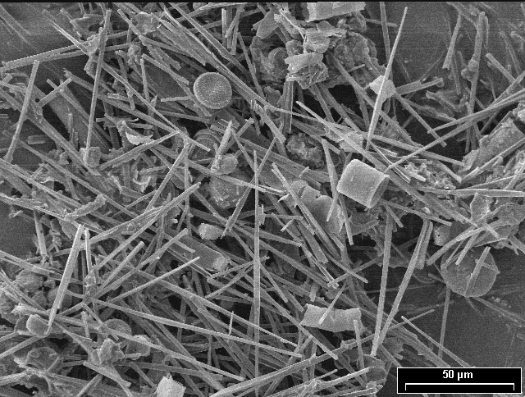
The article “Fluxes and composition of sediment particles in the water column of Southern Lake Baikal between 1999 and 2021” by Vologina E.G., Sturm M., Budnev N.M., published in the journal Limnology and Freshwater Biology, presents data on the total flux of sedimentary material collected between March 1999 and March 2021. The quantity and composition of the retrieved material are largely determined by silicon dioxide (SiO₂) of organic origin, which directly depends on the annual diatom algae bloom in Lake Baikal. Since 2010, particle fluxes have generally increased. Simultaneously, a shift occurred in the dominant diatom species. The so-called “melosira years” with high yields of species from the genus Melosira were replaced by years with increased productivity of species from the genus Synedra. This is possibly due to the climate change, but the influence of changes in solar activity cannot be ruled out.
The full text of the article is available via the link.


